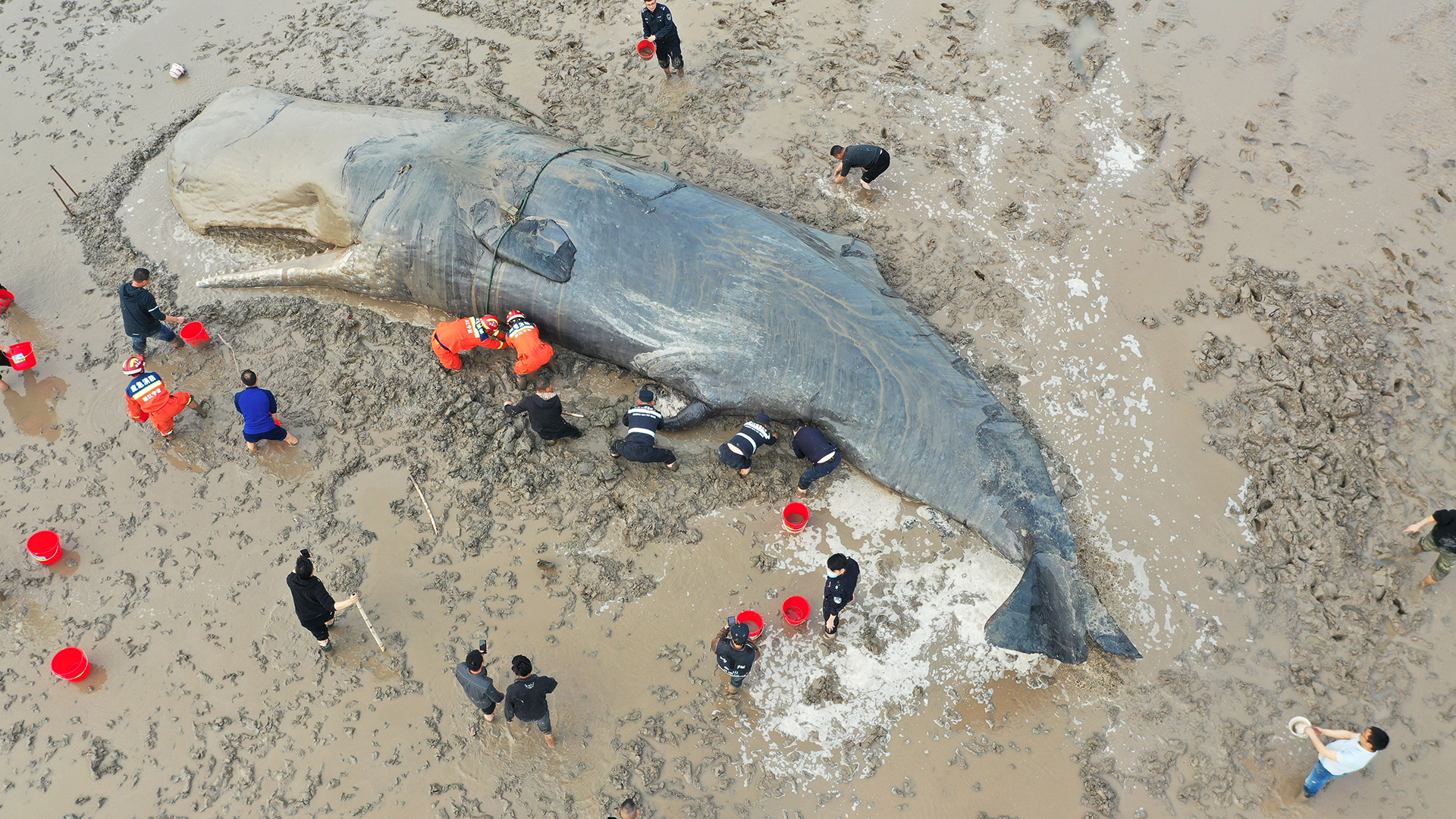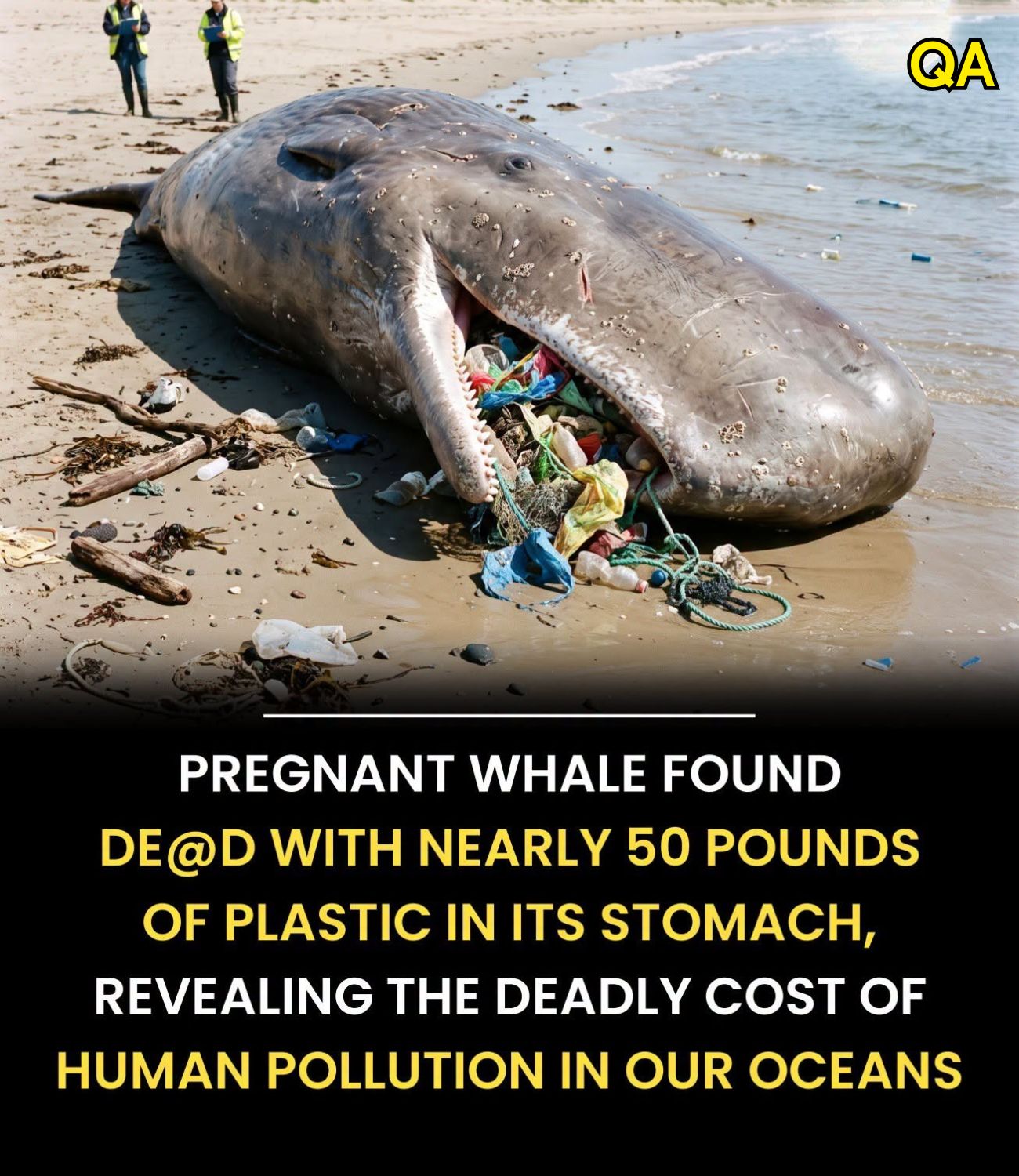

The ocean often appears vast and resilient, stretching far beyond the horizon. Yet beneath its surface, a growing environmental challenge continues to affect marine ecosystems around the world. One of the most striking examples comes from reports of whales found with large amounts of plastic debris inside their stomachs, drawing global attention to the consequences of plastic pollution.
Among these reports is the widely shared story of a pregnant whale that was found after ingesting nearly 50 pounds (about 22 kilograms) of plastic waste. While the exact details vary between individual incidents reported over the years, scientists agree that plastic ingestion has become an increasingly serious threat to many marine species.
How Plastic Ends Up in the Ocean
Every year, millions of tons of plastic enter rivers, coastlines, and oceans through a variety of sources, including:
- Improperly discarded packaging
- Single-use plastic bags
- Plastic bottles and containers
- Lost or abandoned fishing gear
- Microplastics created as larger items break down
Ocean currents can carry this debris across great distances, exposing wildlife in even remote marine environments.
Why Whales Mistake Plastic for Food
Many whale species feed by filtering enormous volumes of seawater or by consuming prey such as squid and krill.
Floating plastic can resemble natural prey or become mixed with food sources. In some cases, whales accidentally ingest plastic while feeding.
Researchers have documented plastics including:
- Shopping bags
- Food wrappers
- Fishing nets
- Rope
- Plastic sheeting
- Packaging materials
Once swallowed, these materials often cannot be digested.
The Health Effects on Marine Mammals
Plastic inside the digestive system can cause numerous health problems, including:
- Reduced appetite
- Digestive blockages
- Internal irritation
- Poor nutrient absorption
- Reduced energy reserves
Large accumulations of plastic may prevent animals from eating enough natural food to maintain their health.
Scientists continue studying how plastic exposure may also affect reproduction, immune function, and overall survival in marine wildlife.
A Global Environmental Challenge
Plastic pollution is not confined to one country or one ocean.
Marine debris has been documented from tropical coastlines to the Arctic and even in some of the deepest parts of the ocean.
Because plastics break down very slowly, many items remain in the marine environment for decades.
This long lifespan allows debris to continue affecting wildlife long after it first enters the ocean.
What Researchers Recommend
Environmental scientists generally agree that reducing plastic pollution requires action at multiple levels.
Common recommendations include:
- Reducing unnecessary single-use plastics
- Improving waste collection and recycling systems
- Preventing litter from reaching waterways
- Supporting responsible fishing gear management
- Encouraging innovation in sustainable packaging
- Strengthening international cooperation on marine pollution
No single solution can address the problem alone, making collaboration among governments, industries, communities, and individuals especially important.

What Individuals Can Do
While large-scale policy changes are important, everyday actions can also contribute to reducing marine pollution.
Examples include:
- Using reusable shopping bags and water bottles
- Properly disposing of waste
- Participating in community cleanups
- Recycling according to local guidelines
- Choosing products with less plastic packaging when practical
Collectively, these small actions can help reduce the amount of plastic entering the environment.
Looking Ahead
Stories of whales found with significant amounts of plastic in their stomachs have become powerful symbols of the broader challenge facing the world’s oceans. Although individual cases are deeply concerning, they also encourage greater awareness of how everyday materials can affect ecosystems far from where they are used.
Continued scientific research, improved waste management, technological innovation, and public awareness all play important roles in protecting marine life. As understanding of ocean pollution grows, so does the opportunity to develop solutions that help preserve healthy oceans for future generations.