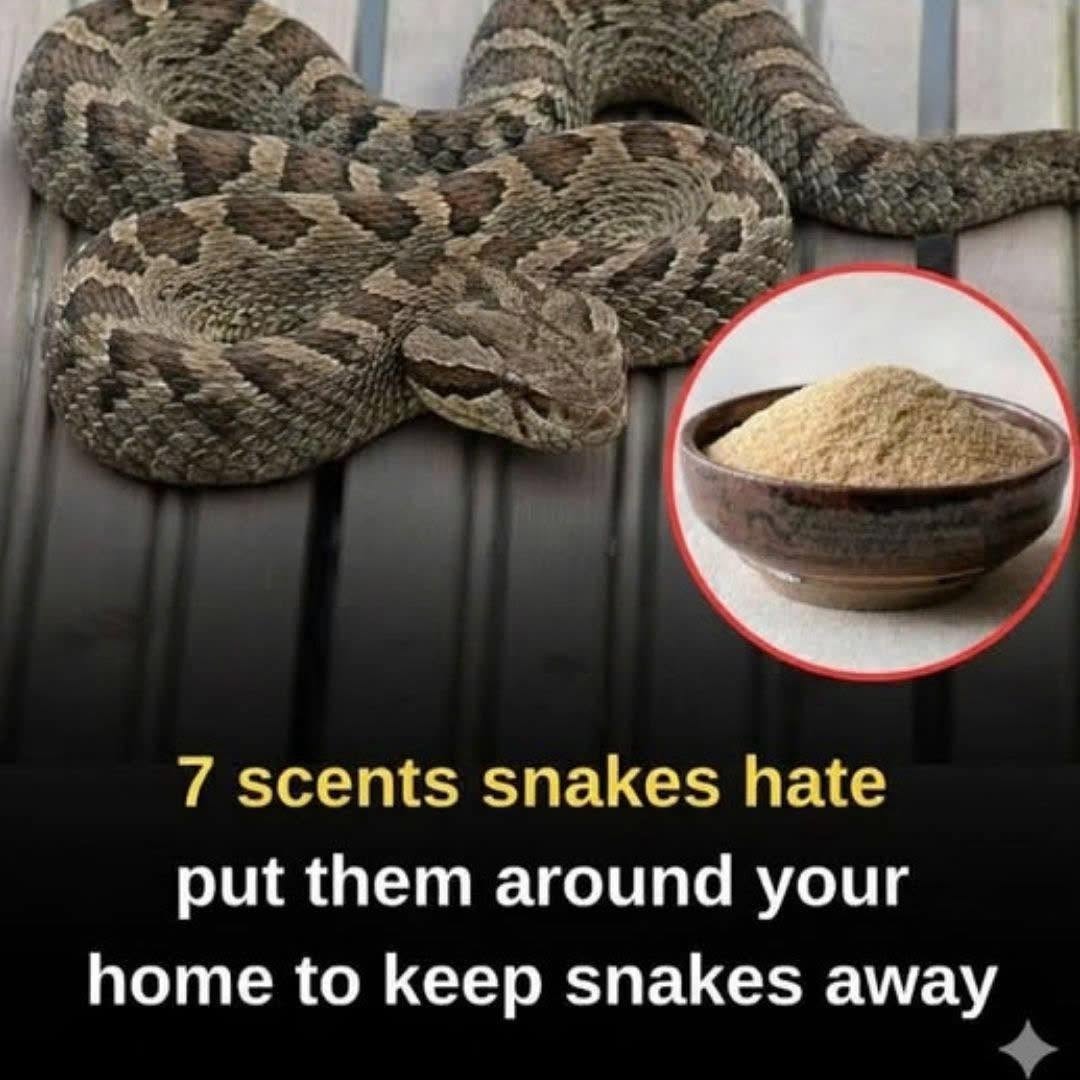

It was a warm summer evening when Mark stepped into his backyard to water the flowers. As he reached for the garden hose, he noticed a long, slender shape quietly moving beneath a row of shrubs. The visitor disappeared almost as quickly as it appeared, leaving Mark surprised but unharmed.
Like many homeowners, his first question wasn’t how to remove the snake—it was how to prevent another unexpected encounter.
Friends suggested everything from mothballs to garlic. Internet forums recommended essential oils, vinegar, and even human hair. The advice was endless, but much of it was contradictory.
The truth is that snakes have fascinated—and sometimes worried—people for thousands of years. Across cultures, they symbolize wisdom, renewal, mystery, and the natural balance of ecosystems. Scientifically, however, snakes are simply wild animals searching for food, shelter, and suitable habitat. Understanding what attracts them and what may encourage them to move elsewhere is far more effective than relying on myths.
Among the many natural solutions discussed by homeowners are certain strong odors that snakes may prefer to avoid. While no scent can guarantee complete protection, several have shown potential as part of a broader, humane snake prevention strategy.
Let’s explore seven commonly recommended smells snakes dislike, what science says about them, and the best ways to keep your property less attractive to these fascinating reptiles.
How Snakes Use Their Sense of Smell
Unlike humans, snakes experience the world through a highly specialized chemical detection system.
Instead of relying mainly on their noses, they repeatedly flick their tongues through the air. Tiny scent particles stick to the tongue and are transferred to the Jacobson’s organ, also called the vomeronasal organ, located inside the roof of the mouth.
This remarkable sensory system helps snakes:
Locate prey
Recognize predators
Find potential mates
Navigate their surroundings
Identify safe hiding places
Because scent plays such an important role in their daily lives, strong odors may influence where snakes choose to travel. However, experts emphasize that scents alone are rarely enough if food and shelter remain readily available.

The Cultural Significance of Snakes
Throughout history, snakes have held powerful symbolic meanings.
Ancient Egyptians associated snakes with royal protection.
In Greek mythology, the serpent became a symbol of healing through the staff of Asclepius, a symbol still used in medicine today.
Many Indigenous cultures viewed snakes as symbols of transformation because they shed their skin.
In parts of Asia, snakes often represent wisdom, prosperity, and renewal.
These cultural traditions remind us that snakes have long inspired both respect and curiosity. While some stories portray them as mysterious creatures with extraordinary abilities, modern wildlife science encourages us to understand their real behaviors based on observation and research.
1. Ammonia
Ammonia is frequently mentioned as a snake deterrent because of its sharp, irritating odor.
Some wildlife specialists believe the smell may encourage snakes to avoid treated areas, although scientific evidence remains limited.
Homeowners who choose to use ammonia sometimes soak cloths in a diluted solution and place them near garages, crawl spaces, or sheds.
Because ammonia can damage plants and irritate people and animals, it should never be poured directly onto soil or vegetation.
Using it sparingly and with proper ventilation is generally recommended.
2. Garlic and Onions
Garlic and onions contain sulfur compounds responsible for their distinctive smell.
These compounds are believed to interfere with the chemical signals snakes use when exploring their surroundings.
Many homemade snake-repellent recipes combine crushed garlic, onions, and water into a spray applied around fences, gardens, and foundations.
While research has not conclusively proven their effectiveness against snakes, many gardeners appreciate garlic for its additional ability to discourage certain insects and other garden pests.
3. Marigolds
Marigolds are valued not only for their colorful flowers but also for their strong fragrance.
Some gardeners believe planting marigolds around vegetable beds and walkways helps create an environment that snakes find less appealing.
Scientifically, marigolds are better known for helping discourage certain insects and nematodes rather than snakes directly.
Still, because they contribute to a healthy, well-maintained landscape, they can play a supportive role in an overall prevention strategy.
4. Cinnamon and Clove Essential Oils
Essential oils receive considerable attention in natural pest-control discussions.
Cinnamon oil contains cinnamaldehyde, while clove oil contains eugenol, compounds with strong aromas that may irritate the sensory organs of some reptiles.
Some commercial snake repellents include these ingredients.
A diluted mixture sprayed around decks, fences, and outdoor structures may temporarily discourage snakes from entering those areas.
However, essential oils should always be used carefully around pets, especially cats, as certain oils can be harmful if improperly applied.
5. Vinegar
White vinegar is another commonly recommended natural deterrent.
Its acidic smell is particularly associated with areas near ponds, fountains, and damp environments where snakes occasionally search for amphibians or drinking water.
Applying vinegar around the edges of water features may provide a temporary scent barrier.
Rain and irrigation quickly reduce its strength, meaning repeated applications would be necessary if homeowners choose this approach.
6. Lemongrass and Citronella
Lemongrass produces a pleasant citrus fragrance that many people enjoy.
Some experts suggest its scent may help mask odors associated with rodents, one of the primary food sources attracting many snake species.
Citronella is more commonly known for discouraging mosquitoes, but some homeowners also use citronella-based products around patios and outdoor seating areas.
Although evidence regarding snake deterrence remains limited, these plants add beauty and fragrance to gardens while supporting other pest-management goals.
7. Sulfur
Powdered sulfur has long been promoted as a traditional snake deterrent.
Some believe snakes dislike crossing sulfur-treated areas because the particles may irritate their skin and sensory systems.
However, sulfur should be handled carefully.
It may irritate human skin, eyes, and lungs if inhaled.
Some regions regulate its use, and households with children or pets should carefully consider safer alternatives before applying sulfur outdoors.

Popular Snake Repellent Myths
Many widely shared home remedies have little or no scientific support.
Mothballs
Despite persistent online claims, mothballs are not recommended as outdoor snake repellents.
They are designed for enclosed spaces and may present risks to people, pets, and wildlife if used improperly.
Human Hair
Some believe scattered human hair frightens snakes.
Wildlife experts have found little evidence supporting this claim.
Plastic Owls
Decorative owl statues may temporarily discourage birds.
Snakes, however, generally rely more on chemical cues than visual appearance and quickly ignore stationary objects.
Habitat Modification: The Most Effective Solution
Professional wildlife specialists consistently agree that reducing attractive habitat works better than relying solely on scents.
Simple improvements include:
Keeping grass trimmed
Removing piles of wood, rocks, and debris
Controlling rodent populations
Sealing gaps beneath doors
Repairing foundation cracks
Installing screens over crawl-space vents
Removing unnecessary clutter near buildings
Without food and shelter, snakes are much less likely to remain nearby.
Understanding Snake Behavior
Most snake species prefer avoiding people.
They generally seek quiet places where they can hunt small animals and remain hidden.
If startled, many snakes simply move away rather than approaching humans.
This natural behavior explains why unexpected encounters often end peacefully once both the snake and the person have space to retreat.
Learning to recognize local snake species can also reduce unnecessary concern, as many are harmless and contribute positively to ecosystem balance.
When Professional Assistance Is Appropriate
If a snake repeatedly appears inside a home or occupies an area where safe removal is difficult, contacting local wildlife authorities or licensed wildlife professionals is often the best solution.
Professional relocation methods prioritize both human safety and animal welfare while complying with local wildlife regulations.
Attempting to handle unfamiliar snakes without proper training is never recommended.
Balancing Respect for Wildlife with Home Safety
Snakes play an essential ecological role by naturally helping regulate rodent populations.
Rather than viewing them solely as unwanted visitors, many conservationists encourage coexistence whenever possible.
Humane deterrents, habitat management, and thoughtful landscaping allow homeowners to reduce encounters while respecting native wildlife.
This balanced approach benefits both people and the environment.

Conclusion
The idea that certain smells discourage snakes has circulated for generations, blending traditional knowledge with modern gardening advice. While scents such as ammonia, garlic, vinegar, cinnamon, and citronella may influence snake behavior in some situations, scientific research suggests that no odor alone provides guaranteed protection.
The most effective long-term strategy combines sensible habitat management with an understanding of why snakes visit certain areas in the first place. By removing food sources, limiting hiding places, and maintaining a tidy landscape, homeowners create an environment that is naturally less inviting to these reptiles.
Our fascination with snakes stretches back through mythology, folklore, and scientific discovery alike. Whether they appear as symbols of wisdom, transformation, or simply remarkable members of the natural world, snakes remind us that curiosity grows strongest when paired with knowledge. The more we understand these animals, the easier it becomes to appreciate their place in nature while peacefully protecting our own homes.
Sources
- National Park Service (NPS) – Snakes and Reptile Safety: https://www.nps.gov
- Smithsonian’s National Zoo & Conservation Biology Institute – Reptiles: https://nationalzoo.si.edu
- University of California Integrated Pest Management Program – Vertebrate Pest Management: https://ipm.ucanr.edu
- U.S. Fish & Wildlife Service – Living with Wildlife: https://www.fws.gov
- Florida Fish and Wildlife Conservation Commission – Living with Snakes: https://myfwc.com
- Cornell University College of Veterinary Medicine – Snake Information: https://www.vet.cornell.edu
- National Geographic – Snake Facts and Behavior: https://www.nationalgeographic.com/animals
