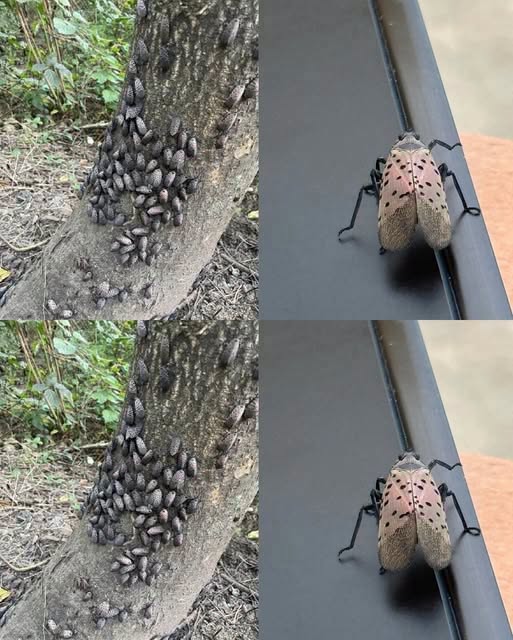

It begins like many ordinary mornings. You step outside to enjoy your garden, expecting to see healthy leaves, colorful flowers, and birds moving among the trees. Instead, something unusual catches your attention.
A brightly colored insect with spotted gray wings suddenly hops from one branch to another. Nearby, leaves appear sticky, and beneath the tree you notice a shiny coating on outdoor furniture and patio stones. At first glance, the insect seems harmless, perhaps even attractive. However, gardeners and agricultural experts have learned that this distinctive visitor deserves closer attention.
The insect is known as the spotted lanternfly (Lycorma delicatula), an invasive planthopper that has attracted significant scientific interest because of its ability to spread rapidly and affect a wide variety of plants. While it poses little direct risk to people or pets, its feeding habits can place stress on trees, vineyards, orchards, and ornamental landscapes.
Understanding how to recognize the spotted lanternfly, why it has become an environmental concern, and how to respond responsibly can help homeowners protect both their gardens and local ecosystems.
What Is the Spotted Lanternfly?
The spotted lanternfly is an invasive insect belonging to the family Fulgoridae. Despite its common name, it is neither a true fly nor a lantern-bearing insect. Instead, it is a species of planthopper that feeds by piercing plant tissues and extracting sap.
Native to parts of China, Vietnam, and neighboring regions of Asia, the insect was accidentally introduced into several other countries through international trade, most likely by hitchhiking on shipping materials, vehicles, stone products, or outdoor equipment.
Since arriving in new regions, scientists have monitored its spread because of its potential effects on agriculture, forestry, and ornamental plants.
How to Identify a Spotted Lanternfly
Recognizing the insect during its different life stages is one of the most effective ways to manage its spread.
Eggs
Egg masses resemble small patches of dried gray mud spread across smooth surfaces.
They may be found on:
-
Tree trunks
-
Outdoor furniture
-
Fence posts
-
Firewood
-
Rocks
-
Recreational vehicles
-
Trailers
-
Garden equipment
Each egg mass may contain dozens of eggs, making early identification especially valuable.
Young Nymphs
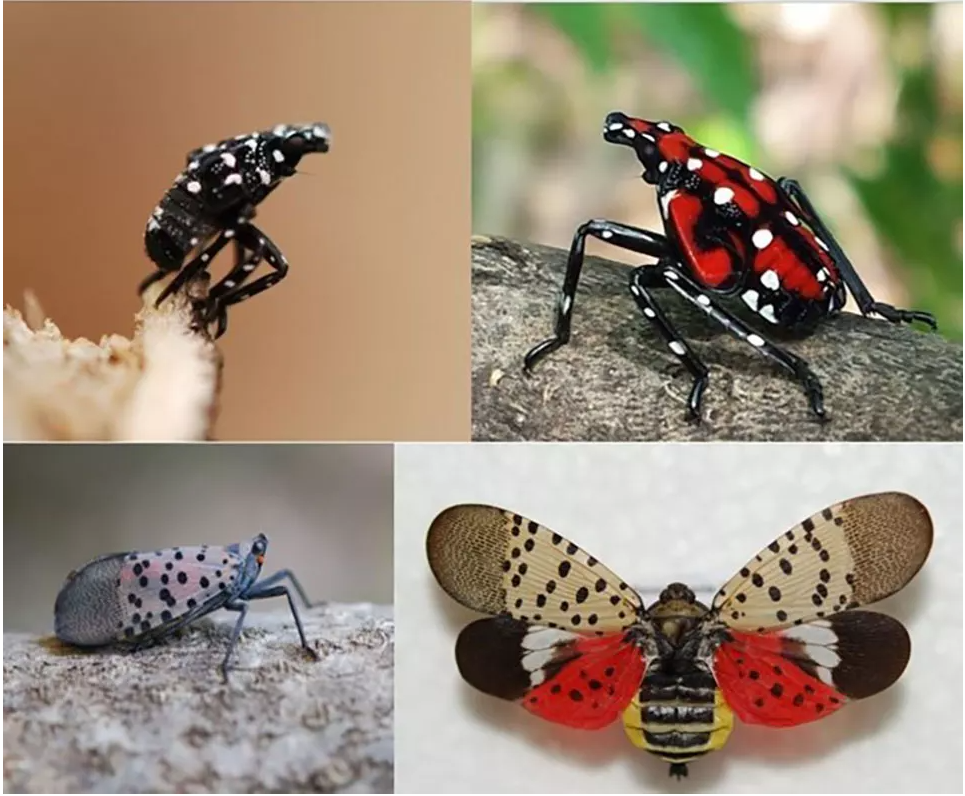
After hatching, immature lanternflies appear black with bright white spots.
Although they cannot fly, they are active jumpers and climb vegetation while searching for suitable host plants.
Older Nymphs
As they develop, their appearance changes dramatically.
The body becomes bright red while retaining distinctive black and white markings.
This colorful stage is often the first one noticed by homeowners.
Adults
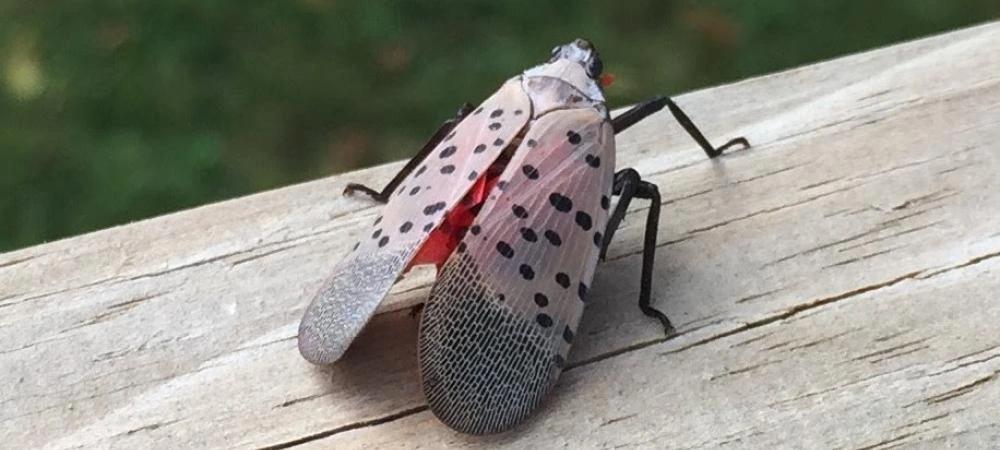
Adult spotted lanternflies measure approximately one inch (2.5 cm) long.
When resting, their wings appear gray with black spots.
During flight, however, they reveal brilliant red hindwings accented with black and white patterns, creating one of the most recognizable appearances among invasive insects.
Where Are Spotted Lanternflies Found?
Although native to Asia, spotted lanternflies have established populations in several countries through accidental introduction.
Scientists believe they spread primarily through human transportation rather than long-distance flight.
Common methods of accidental movement include:
-
Vehicles
-
Shipping containers
-
Firewood
-
Landscaping materials
-
Outdoor furniture
-
Construction equipment
-
Nursery plants
Because adults readily climb onto stationary objects, they can travel considerable distances without being noticed.
Why Scientists Consider Them an Invasive Species
Invasive species are organisms introduced outside their natural range that may affect local ecosystems or agriculture.
The spotted lanternfly has drawn attention because it feeds on more than 70 plant species.
Some commonly affected plants include:
-
Grapevines
-
Maple trees
-
Walnut trees
-
Apple trees
-
Willow
-
Birch
-
Poplar
-
Fruit trees
-
Ornamental shrubs
Heavy feeding can place plants under stress, especially when large numbers gather on a single tree.
Researchers continue studying the long-term ecological effects across different environments.
Understanding Honeydew and Sooty Mold
One of the most noticeable signs of a lanternfly infestation is the sticky substance known as honeydew.
Honeydew is a sugary liquid produced as the insects feed on plant sap.
As it accumulates, it can coat:
-
Leaves
-
Outdoor furniture
-
Patios
-
Decks
-
Cars
-
Walkways
This sticky layer may encourage the growth of sooty mold, a dark fungus that develops on the surface of honeydew.
While the mold itself generally does not infect plant tissues, heavy coverage can reduce the amount of sunlight reaching leaves, potentially affecting photosynthesis and overall plant vigor.
The Role of the Tree of Heaven
One plant receives particular attention in discussions about spotted lanternflies.
The Tree of Heaven (Ailanthus altissima) is itself an invasive tree in many parts of the world.
Although lanternflies feed on many plant species, they are strongly attracted to this tree during portions of their life cycle.
Because of this relationship, environmental agencies sometimes recommend managing Tree of Heaven populations as part of broader lanternfly control strategies.
However, removal should be carefully planned, as improper cutting may encourage vigorous regrowth.
Professional guidance is often recommended for large trees.
Myths About the Spotted Lanternfly
As public awareness has grown, several misconceptions have also appeared online.
Myth: They Are Dangerous to Humans
Current scientific evidence indicates that spotted lanternflies do not bite people, sting, or spread diseases to humans.
Their primary concern involves plants rather than personal safety.
Myth: Every Tree They Visit Will Die
Most healthy trees can tolerate limited feeding.
Problems generally arise when large populations repeatedly feed on the same plants over extended periods.
Researchers continue studying which species are most vulnerable.
Myth: They Can Fly Long Distances
Although adults possess wings, they are stronger jumpers and gliders than sustained flyers.
Long-distance spread is usually associated with accidental transportation by people.
How to Help Protect Your Garden
Managing spotted lanternflies involves observation, early detection, and following recommendations provided by local agricultural agencies.
Helpful practices include:
Inspect Outdoor Items
Before moving outdoor equipment, vehicles, trailers, or firewood, check carefully for egg masses or insects.
Monitor Garden Plants
Regular inspection helps identify potential infestations before populations become large.
Learn Local Reporting Procedures
In areas where spotted lanternflies are newly detected, local authorities may request public reports to help monitor their spread.
Following official guidance supports ongoing research and management efforts.
Follow Local Management Recommendations
Control methods vary depending on regional regulations and environmental considerations.
Agricultural extension offices often provide location-specific advice for homeowners.
Supporting Beneficial Wildlife
When managing invasive insects, protecting beneficial wildlife remains important.
Birds, pollinators, butterflies, and other helpful organisms contribute to healthy ecosystems.
If physical traps are used, experts recommend selecting designs that reduce accidental capture of non-target wildlife.
Thoughtful management allows homeowners to address invasive species while minimizing unintended ecological impacts.
Why Early Detection Matters
Scientists consistently emphasize the importance of identifying invasive species early.
Small populations are generally easier to manage than widespread infestations.
Public participation plays a valuable role because homeowners, gardeners, hikers, and outdoor enthusiasts often become the first people to notice new sightings.
Sharing observations with local agricultural or environmental agencies contributes valuable information for ongoing monitoring programs.
The Science Behind Invasive Species Management
The spotted lanternfly illustrates a broader ecological challenge faced worldwide.
Global trade has increased the movement of plants, animals, and insects across continents.
While most transported species never establish permanent populations, some adapt successfully to new environments.
Researchers study invasive species to better understand:
-
Population growth
-
Ecological interactions
-
Agricultural impacts
-
Natural predators
-
Sustainable management techniques
-
Habitat preferences
Their findings help governments, farmers, researchers, and communities make informed decisions about protecting biodiversity.
Looking Ahead
Scientists continue investigating environmentally responsible ways to manage spotted lanternfly populations.
Current research includes studies of biological control agents, improved monitoring techniques, habitat management, and integrated pest management strategies that combine multiple approaches while reducing unnecessary environmental impacts.
Public education remains one of the most effective tools available.
The more people understand how to recognize invasive species and respond appropriately, the greater the opportunity to reduce their spread.
Conclusion
The spotted lanternfly is one of the most recognizable invasive insects to emerge in recent years. Its striking appearance makes it easy to notice, but its ecological significance extends far beyond its colorful wings. By feeding on a wide range of plants and producing honeydew that encourages sooty mold growth, large populations may place additional stress on gardens, vineyards, orchards, and forests.
Fortunately, informed homeowners can make a meaningful difference. Learning to identify each stage of the insect’s life cycle, inspecting outdoor equipment before moving it, following guidance from local agricultural authorities, and supporting responsible management efforts all contribute to protecting native ecosystems.
Nature is constantly changing, and every new discovery reminds us how interconnected our environment truly is. Scientific research helps us understand these complex relationships, while curiosity encourages us to keep learning about the remarkable species that share our world. By combining awareness with responsible stewardship, we can help preserve healthy landscapes for future generations.
Sources
United States Department of Agriculture (USDA). Spotted Lanternfly Information.
Penn State Extension. Spotted Lanternfly Management Resources.
Cornell University Integrated Pest Management Program. Spotted Lanternfly Identification and Control.
United States Department of Agriculture Animal and Plant Health Inspection Service (APHIS). Spotted Lanternfly Resources.
National Invasive Species Information Center (USDA). Invasive Species Profiles.
University of Maryland Extension. Managing Spotted Lanternfly.
Centre for Agriculture and Bioscience International (CABI). Lycorma delicatula Species Overview.
