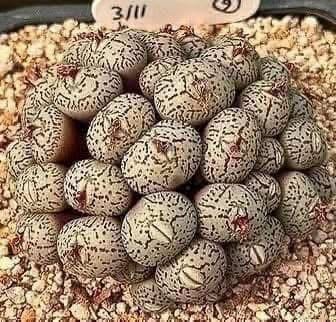

One afternoon, a routine bedroom cleanup took an unexpected turn. While reaching beneath her bed, a young girl noticed dozens of small, rounded objects arranged in a shallow tray. Their speckled surfaces and cracked appearance resembled eggs, and an unusual odor in the room only added to the mystery. Alarm quickly spread through the household as family members wondered whether they had discovered an insect nest or something even more unusual.
Stories like this are popular online because they tap into a common experience: finding something unfamiliar in an unexpected place. The viral article eventually reveals that the mysterious objects were not eggs at all but living stones, also known as Lithops, a fascinating group of succulent plants. While the central identification is scientifically accurate, the dramatic narrative appears to be presented as a storytelling piece rather than a documented news report.
Exploring what Lithops are—and why they are so easily mistaken for eggs or stones—offers an excellent opportunity to appreciate one of nature’s most remarkable plant adaptations.
What the Viral Story Claims
According to the article:
- A child discovered dozens of egg-like objects under her bed.
- The family initially feared they belonged to insects or reptiles.
- An expert identified them as Lithops, commonly called living stones.
- The plants had reportedly been forgotten beneath the bed after a room rearrangement.
- Their unusual appearance had caused unnecessary alarm.
Although this scenario is plausible, the article provides no names, location, photographs verified by experts, or independent documentation confirming that the event actually occurred.
What Are Living Stones?
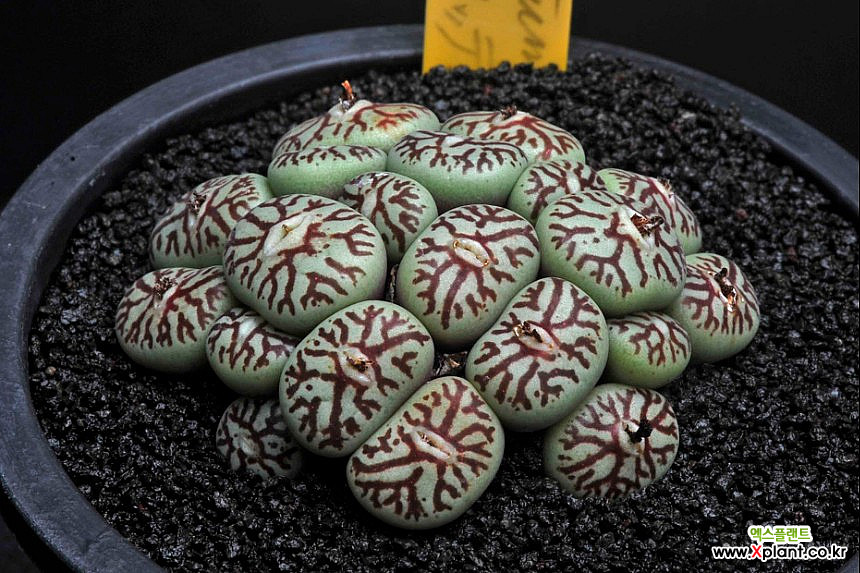
Lithops are small succulent plants native to the dry regions of southern Africa.
They have evolved to resemble the stones surrounding them, making them remarkably difficult to distinguish from their environment.
This camouflage helps protect them from animals that might otherwise feed on them.
Because of their unusual appearance, Lithops have become popular among succulent collectors worldwide.

Why Do Lithops Look Like Eggs?
Many people mistake Lithops for eggs because they have:
- Rounded shapes
- Smooth surfaces
- Speckled patterns
- Paired structures
- Pale gray, brown, green, or cream coloring
Some species even develop natural cracks across their tops during growth, making them appear even more mysterious.
In reality, these cracks are perfectly normal.
How Lithops Grow
Unlike many houseplants, Lithops grow in a unique way.
Each plant usually consists of two thick leaves fused together.
Between these leaves lies a narrow opening where:
- New leaves emerge.
- Flowers develop.
- Old leaves gradually dry out.
Each year, the plant replaces its old pair of leaves with a new one growing from inside.
This process may make the plant appear cracked or split, but it is simply part of its normal life cycle.
Why They Are Called “Living Stones”
The name “living stones” perfectly describes their survival strategy.
In their natural habitat, Lithops blend almost seamlessly with surrounding rocks.
This remarkable camouflage reduces the likelihood of being noticed by grazing animals.
Scientists consider Lithops an excellent example of protective mimicry, an evolutionary adaptation that increases survival.
Can Lithops Multiply?
Yes.
Healthy Lithops may slowly produce additional heads over several years.
However, the article’s suggestion that numerous plants spread widely beneath a bed after escaping a pot should be viewed cautiously.
Lithops are extremely slow-growing succulents.
Although mature plants can divide and form clusters, they generally do not spread rapidly across indoor surfaces on their own.
If dozens of plants were present, they were more likely already growing together in the original container.

Why the Room Had an Odor
The article mentions a strange smell before the discovery.
Healthy Lithops normally produce little or no noticeable odor.
If an unpleasant smell was present, possible explanations could include:
- Moist soil
- Mold
- Organic material nearby
- Overwatering
- Other unrelated household sources
The smell itself should not automatically be attributed to the plants.
Caring for Living Stones
Lithops have different care requirements from many common houseplants.
They generally prefer:
- Bright sunlight
- Excellent drainage
- Minimal watering
- Dry conditions
- Mineral-rich soil
Overwatering is one of the most common reasons these plants fail indoors.
Because they store water inside their leaves, they require surprisingly little irrigation.
Why People Mistake Them for Other Things
Lithops are frequently confused with:
- Pebbles
- Eggs
- Mushrooms
- Decorative stones
- Small animal nests
Their extraordinary resemblance to non-living objects has fascinated botanists for generations.
Many first-time observers are surprised to learn they are actually living plants.
The Science Behind Plant Camouflage
Camouflage is not limited to animals.
Some plants have evolved remarkable appearances that help them avoid herbivores.
Examples include:
- Stone-like succulents
- Leaf-mimicking vines
- Bark-colored orchids
- Pebble-shaped desert plants
Lithops represent one of the most striking examples of plant camouflage known to science.
Are Lithops Safe?
Lithops are generally considered harmless ornamental plants.
They do not:
- Hatch into animals.
- Produce insects.
- Function as nests.
- Spread aggressively indoors.
As with many ornamental plants, they should not be eaten unless identified as safe for that purpose, and households with young children or pets should keep unfamiliar plants out of reach.
Why Viral Nature Stories Become Popular
Stories featuring mysterious discoveries often spread rapidly because they combine:
- Curiosity
- Surprise
- Everyday settings
- Unexpected scientific explanations
- Emotional storytelling
The contrast between initial fear and a harmless explanation creates a satisfying narrative that encourages sharing across social media.
Even when specific stories cannot be independently verified, they often introduce readers to fascinating aspects of the natural world.
Conclusion
The viral story about a young girl discovering mysterious “eggs” under her bed concludes with the surprising identification of the objects as Lithops, or living stones. While the dramatic family experience cannot be verified from the information provided, the plants themselves are very real and represent one of nature’s most remarkable examples of camouflage.
Lithops have evolved to resemble ordinary stones, allowing them to survive in harsh desert environments by avoiding detection. Their cracked appearance, unusual shapes, and slow growth often surprise people unfamiliar with these extraordinary succulents. Understanding their biology transforms what first appears mysterious into an appreciation of evolutionary adaptation.
Ultimately, moments of surprise often spark our greatest curiosity. By approaching unusual discoveries with both imagination and scientific inquiry, we can replace uncertainty with knowledge and gain a deeper appreciation for the remarkable diversity of the natural world.

Sources
Royal Horticultural Society (RHS). Guidance on growing Lithops and succulent care.
Missouri Botanical Garden. Plant Finder: Lithops species.
Kew Science, Royal Botanic Gardens, Kew. Information on succulent diversity and plant adaptations.
International Crassulaceae Network. Educational resources on succulent biology.
Encyclopaedia Britannica. Articles on succulents, plant adaptation, and desert ecology.
Cactus and Succulent Society of America (CSSA). Resources on Lithops cultivation and identification.
