
For thousands of years, humanity has wondered what happens at the boundary between life and death. Ancient civilizations created myths about spiritual journeys, heavenly realms, and encounters beyond the physical world. Today, modern medicine approaches the subject through neuroscience, psychology, and critical care research. Yet despite scientific advances, stories from people who report near-death experiences continue to capture global attention.
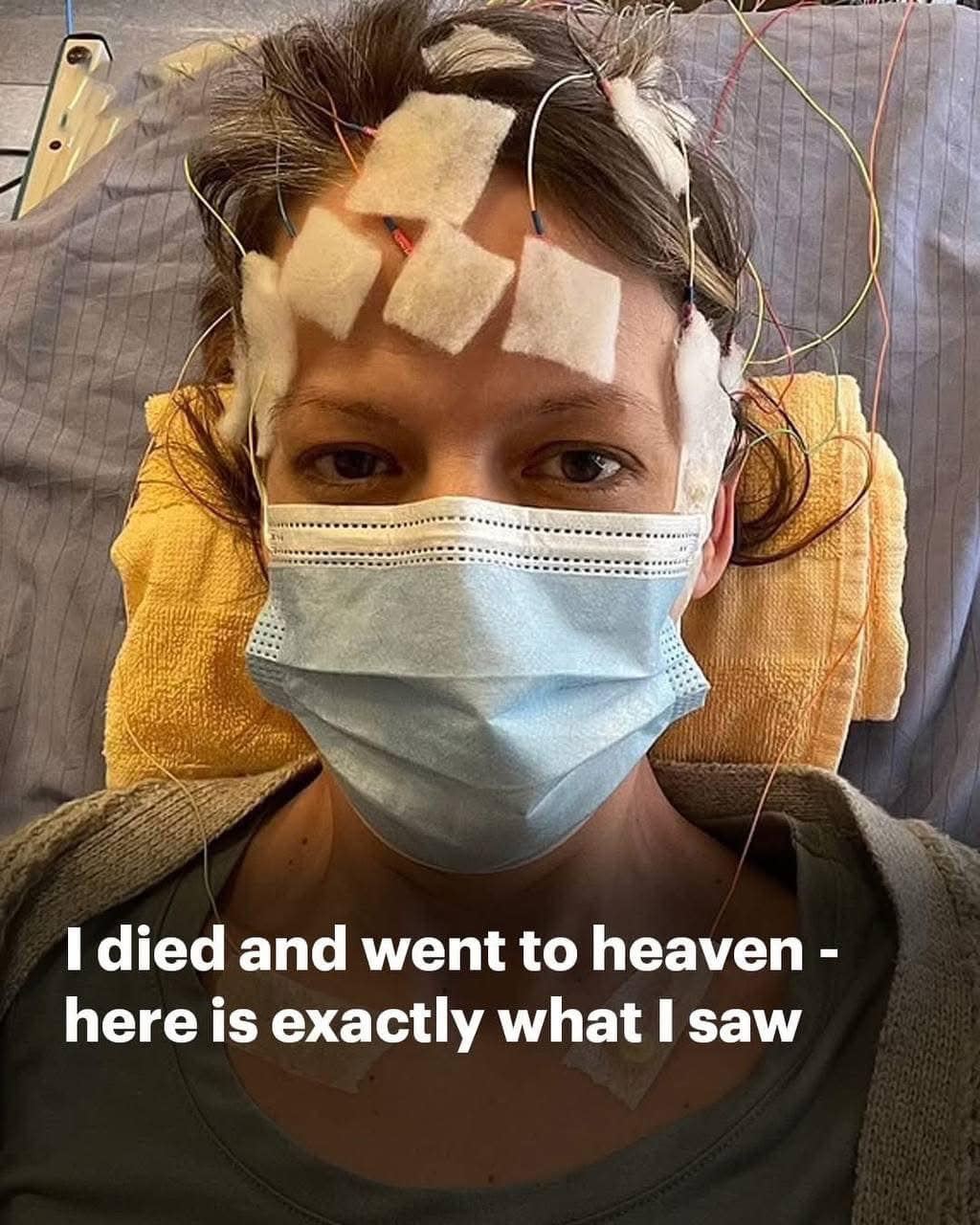
A recent article from Daily Mail described the account of an individual who claimed to have experienced vivid visions after suffering cardiac arrest as a teenager. According to the report, the person recalled sensations of light, floating, emotional intensity, and unusual beings during the period in which medical teams were attempting resuscitation.
While such experiences remain deeply personal and impossible to verify objectively, they are part of a much larger phenomenon that has fascinated researchers, religious scholars, and the public for decades. Scientists continue studying why some individuals report remarkably vivid perceptions during moments of severe physical crisis, while spiritual traditions often interpret these stories through religious or symbolic frameworks.

What Are Near-Death Experiences?
A Near-Death Experience, often abbreviated as NDE, refers to unusual experiences reported by some individuals who come close to death or temporarily lose measurable consciousness during medical emergencies.
Commonly reported features include:
Feelings of peace or calm
Seeing bright light
A sense of floating outside the body
Heightened emotional awareness
Perceived encounters with spiritual figures
Visions of deceased relatives
Distorted experiences of time
A feeling of moving through a tunnel or gateway
Not every person reports the same experience, and some individuals recall nothing at all during periods of unconsciousness.
Researchers emphasize that near-death experiences are highly subjective and vary widely depending on cultural background, expectations, personal beliefs, and neurological factors.
Why Stories Like These Spread So Widely
Accounts involving life after death naturally attract public attention because they touch on one of humanity’s oldest and most universal questions.
People from nearly every culture throughout history have wondered whether consciousness continues after physical death. Stories involving near-death experiences often feel emotionally powerful because they appear to offer glimpses into an unknown realm that science has not fully explained.
Psychologists note that humans are naturally drawn to mysteries involving identity, mortality, and meaning. Near-death stories combine all three themes at once.
Additionally, many people find comfort, fear, fascination, or spiritual reflection in hearing how others describe experiences at the edge of life.
Ancient Beliefs About the Afterlife
Long before modern hospitals existed, civilizations developed elaborate beliefs surrounding death and the afterlife.
Ancient Egyptians believed the soul journeyed through spiritual realms after death, guided by rituals and divine judgment.
In The Tibetan Book of the Dead, spiritual teachings describe transitional states between life and rebirth.
Greek mythology imagined the soul crossing into the underworld, while many religious traditions describe heavens, paradises, or spiritual reunions.
Interestingly, modern near-death reports sometimes contain symbolic imagery similar to ancient spiritual traditions, including light, gates, journeys, and encounters with spiritual figures.
However, interpretations differ dramatically depending on cultural and religious context.
The Scientific Perspective on Near-Death Experiences
Modern neuroscience approaches near-death experiences cautiously and scientifically.
Researchers studying cardiac arrest survivors have discovered that some brain activity may continue briefly after the heart stops. In certain situations, the brain can experience unusual electrical patterns during oxygen deprivation, trauma, or resuscitation.
Scientists have proposed several possible explanations for near-death experiences, including:
Changes in oxygen levels
Neurochemical releases during trauma
Memory activation
Dream-like brain states
Disruptions in sensory processing
Temporal lobe activity
Psychological coping mechanisms
Some researchers believe these experiences may result from the brain attempting to process extreme physiological stress.
Others argue that science still does not fully understand consciousness itself, leaving many unanswered questions open for future research.

Why Bright Lights and Tunnel Visions Are Common
One of the most frequently reported elements in near-death stories involves seeing bright lights or tunnel-like imagery.
Neurologists suggest this may relate to how the visual cortex reacts under stress or reduced oxygen supply. As peripheral vision becomes disrupted, people may perceive narrowing visual fields resembling tunnels.
Similarly, heightened emotional sensations or vivid imagery may result from changes in neurotransmitter activity during critical medical events.
Importantly, researchers emphasize that these explanations remain theories rather than complete answers.
The brain remains one of the least fully understood organs in human biology.
Spiritual Interpretations Around the World
While science studies physiological explanations, many religious and spiritual traditions interpret near-death experiences differently.
Some believers view such experiences as evidence of the soul leaving the body temporarily.
Others interpret them symbolically, seeing the visions as spiritual metaphors rather than literal journeys.
Christian traditions often describe encounters with heavenly light or divine presence. Buddhist teachings may frame these experiences as transitional consciousness states. Hindu philosophy sometimes connects near-death experiences to karma and rebirth.
Cultural background can strongly influence how individuals describe and interpret what they experienced.
Researchers have found that people often report imagery consistent with their existing spiritual expectations or cultural understanding.
The Emotional Impact on Survivors
Regardless of interpretation, near-death experiences can profoundly affect people emotionally.
Many survivors report lasting changes in perspective after recovering from life threatening situations. Some describe increased appreciation for life, reduced fear of death, or greater spiritual curiosity.
Others may experience confusion, anxiety, or difficulty explaining what they felt.
Mental health specialists note that intense medical trauma itself can create emotional effects independent of any spiritual interpretation.
Supportive counseling is sometimes recommended for individuals struggling to process emotionally overwhelming experiences after medical emergencies.
Why Scientists Continue Studying Consciousness
Near-death research remains scientifically important because it connects to broader questions about consciousness itself.
Consciousness refers to awareness, perception, thought, and subjective experience. Despite enormous advances in neuroscience, scientists still debate exactly how consciousness emerges from brain activity.
Some researchers study near-death experiences hoping to better understand:
Memory formation
Brain activity during trauma
Awareness under anesthesia
Conscious perception
Human cognition during medical crises
These investigations do not necessarily attempt to prove or disprove spiritual beliefs. Instead, they explore how the brain behaves under extraordinary conditions.
The Difference Between Clinical Death and Brain Death
One important distinction often misunderstood in public discussions involves the difference between clinical death and brain death.
Clinical death generally refers to the temporary absence of heartbeat and breathing. In some cases, modern medical intervention can still restore circulation and consciousness after several minutes.
Brain death, however, refers to irreversible loss of all brain function.
Medical experts emphasize that near-death experiences are usually associated with temporary medical crises rather than confirmed irreversible brain death.
This distinction matters because many sensational headlines oversimplify complex medical terminology.
Why Online Stories Should Be Approached Carefully
Social media platforms and online forums frequently amplify dramatic personal stories involving near-death experiences.
While some accounts may reflect sincere personal experiences, they remain anecdotal and impossible to independently verify.
Scientists encourage respectful curiosity while also maintaining critical thinking.
Personal testimony can provide insight into human psychology and perception, but it does not automatically establish universal scientific conclusions about the afterlife.
Balanced discussion recognizes both the emotional importance of these stories and the limits of current scientific understanding.

Humanity’s Enduring Fascination With Life After Death
Few topics remain as emotionally powerful as the possibility of consciousness continuing beyond physical life.
Throughout history, people have searched for answers through religion, philosophy, storytelling, meditation, and science.
Near-death experiences continue attracting attention because they exist at the intersection of all these fields simultaneously. They involve medicine, spirituality, psychology, and existential curiosity all at once.
Even in an age of advanced neuroscience and medical technology, the mystery of consciousness remains deeply compelling.
A Reflection on Human Curiosity and the Unknown
Stories about near-death experiences persist because they touch something universal within human nature: the desire to understand existence itself.
People seek meaning in moments that challenge ordinary understanding, especially experiences involving mortality, consciousness, and the possibility of something beyond physical life.
Science continues exploring the neurological and psychological dimensions of these experiences, while spiritual traditions continue interpreting them through faith and symbolism.
Perhaps the enduring power of near-death stories lies not in proving any single answer, but in reminding humanity how much remains unknown about consciousness, perception, and the human experience itself.
In the end, the fascination surrounding these accounts reflects one of humanity’s oldest instincts: to look beyond the visible world and wonder what mysteries may still exist beyond the boundaries of current understanding.

Sources
National Institutes of Health Near-Death Experience Research
American Psychological Association
