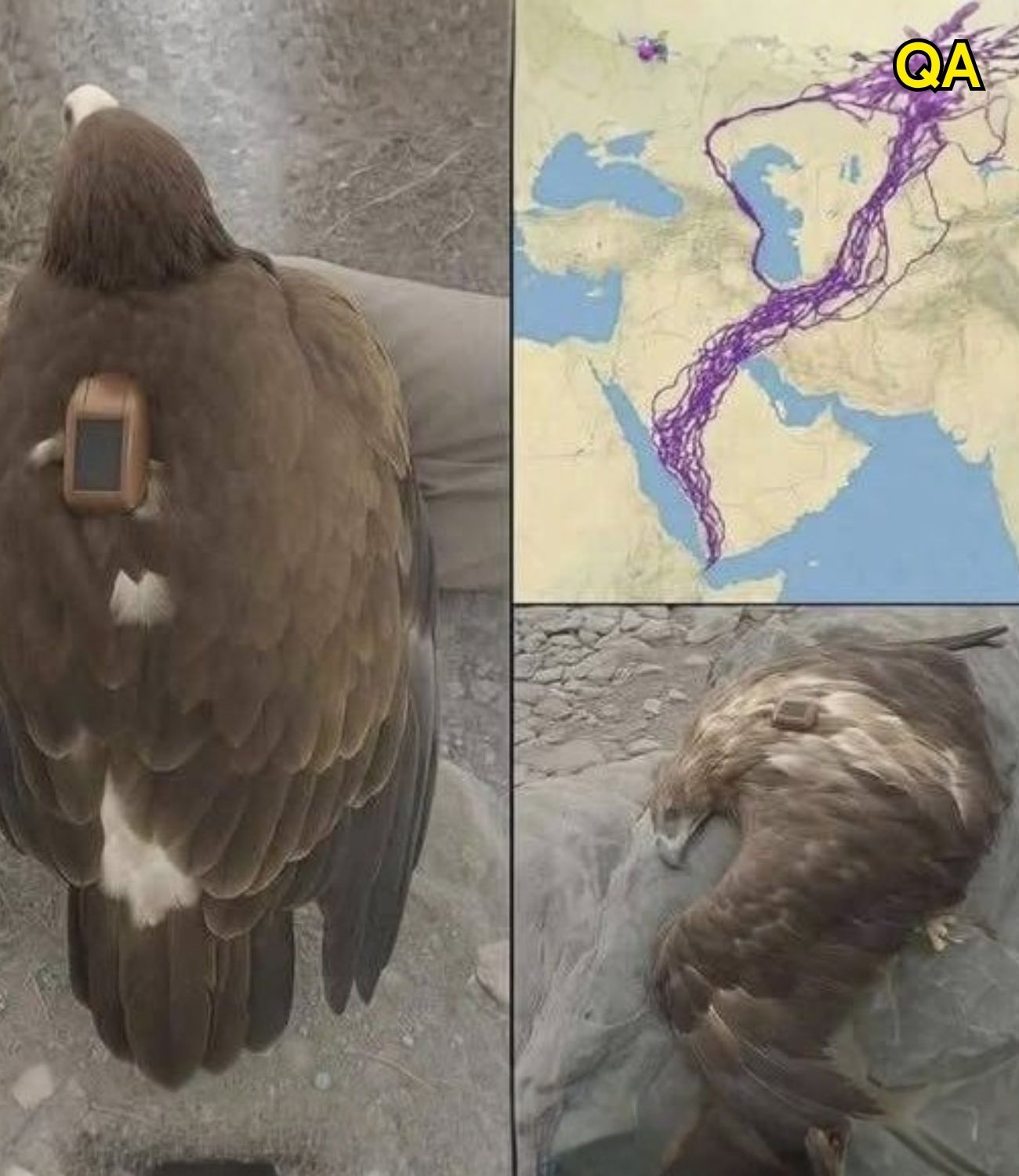

Some stories from the natural world resonate not because they are dramatic, but because they quietly reveal how extraordinary ordinary life can be. One such story emerged when researchers tracked the migration of an eagle equipped with a GPS device over many years, uncovering a remarkable pattern of movement across continents.
What began as a routine wildlife study gradually became an inspiring example of avian navigation, environmental adaptation, and endurance. The eagle’s repeated journeys demonstrated how animals interact with landscapes in ways humans are still working to fully understand.
Beyond the scientific findings, the story also sparked public fascination because it reflected something deeply familiar: the search for safe passage through changing conditions.

Why Scientists Track Migrating Birds
Understanding Animal Movement
Researchers use lightweight GPS tracking devices to better understand how birds travel, feed, rest, and adapt to environmental conditions.
These studies help scientists identify:
Migration corridors
Important feeding grounds
Seasonal habitat changes
Environmental pressures affecting wildlife
Tracking data also contributes to conservation efforts by revealing which ecosystems are essential for survival during migration.
Why Eagles Are Important to Study
Eagle species are especially valuable for migration research because they travel long distances and depend heavily on environmental conditions such as wind and terrain.
Their movement patterns can provide clues about broader ecological health across regions and continents.
A Journey Shaped by Strategy
Not the Shortest Route
One of the most fascinating discoveries from the tracked eagle was that it consistently avoided direct routes across large bodies of water.
Instead, the bird followed coastlines, mountain ranges, and land corridors that provided safer flying conditions and access to rising warm air currents.
To human observers, a straight line on a map might appear most efficient. In nature, however, survival often depends on conserving energy rather than minimizing distance.
Following the Landscape
Researchers observed that the eagle repeatedly selected routes offering:
Reliable thermals
Resting opportunities
Access to food sources
Safer weather conditions
This suggested not random wandering, but highly refined instinctive behavior shaped through generations of adaptation.

How Eagles Fly Long Distances
The Role of Thermals
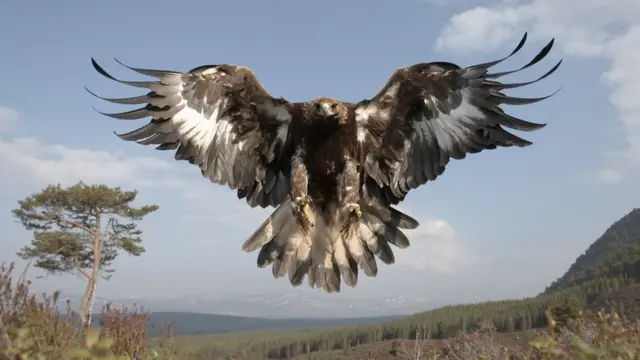
Large birds such as Golden Eagle often rely on thermals, which are rising columns of warm air created when sunlight heats the earth’s surface.
By circling inside these upward currents, eagles gain altitude without continuously flapping their wings. This technique allows them to glide efficiently over long distances while conserving energy.
Why Open Water Creates Challenges
Over oceans and large lakes, thermals are weaker or less predictable because water heats differently than land.
As a result, birds that depend on soaring flight frequently avoid extended water crossings whenever possible.
The eagle’s migration pattern strongly reflected this environmental awareness.
The Science of Bird Navigation
How Birds Find Their Way
Scientists believe migrating birds use several navigation tools simultaneously.
Research suggests birds may rely on:
Visual landmarks
The position of the sun
Earth’s magnetic field
Wind patterns
Memory from previous migrations
Together, these systems allow birds to travel across enormous distances with surprising consistency.
Experience and Instinct Working Together
Long-lived birds appear to refine migration routes over time. Young birds may rely more heavily on instinct, while older individuals gradually improve efficiency through experience.
The decades-long GPS record provided researchers with a rare opportunity to observe this process over many migration cycles.
Why the Story Resonated Worldwide
More Than Scientific Data
Although the migration findings were scientifically valuable, many people connected emotionally with the story because it transformed complex data into a relatable narrative.
The image of a single eagle crossing continents year after year inspired reflection on endurance, awareness, and resilience.

Nature as a Source of Perspective
Wildlife stories often remind people that intelligence appears in many forms. Animals may not reason like humans, but their survival strategies reveal sophisticated adaptation to environmental realities.
The eagle’s choices reflected patience, caution, and long-term efficiency rather than speed or risk-taking.
Eagles in Myth and Culture
Symbols Across Civilizations
Eagle figures appear throughout mythology, folklore, and cultural traditions around the world.
They are commonly associated with:
Vision
Freedom
Strength
Wisdom
Perspective
Ancient civilizations often viewed eagles as messengers between earth and sky because of their soaring flight and commanding presence.
Why Symbolism Matters
The symbolic meaning attached to eagles likely contributed to public fascination with the migration story. People naturally interpreted the bird’s journey not only as a scientific event, but also as a metaphor for perseverance and thoughtful navigation through life’s challenges.
Technology and Wildlife Conservation
How GPS Tracking Helps Protect Species
Modern tracking technology has transformed wildlife research. Lightweight devices now allow scientists to collect detailed movement data without significantly interfering with animal behavior.
This information supports conservation efforts by identifying habitats that need protection.
Environmental Awareness Through Data
Migration studies also demonstrate how interconnected ecosystems truly are. A single migrating bird may depend on safe habitats spanning multiple countries and climates.
Protecting migratory species therefore requires international cooperation and environmental stewardship across borders.
The Growing Popularity of Birdwatching
Connecting With Nature
Stories like this have encouraged greater public interest in birdwatching and wildlife observation.
Birdwatching offers people an opportunity to slow down, pay attention, and notice patterns in the natural world that often go overlooked.
Mental and Emotional Benefits
Research has also linked time spent observing nature with reduced stress and improved mental well-being.
Watching birds migrate, glide, and interact with their environments can foster patience, curiosity, and a stronger sense of connection to the world around us.
Lessons Humans Draw From Nature
The Safest Path Is Not Always the Fastest
One reason the eagle’s journey resonated so deeply is that many people saw broader lessons reflected in its behavior.
The bird consistently avoided risky shortcuts in favor of routes supporting long-term endurance and survival.
Adaptation Over Force
The migration also illustrated the value of adapting to conditions rather than fighting against them. By working with wind patterns and geography instead of resisting them, the eagle conserved energy and maintained resilience over time.
Nature often rewards balance and awareness more than speed alone.
Conclusion: What One Eagle Reminds Us About the Natural World
The story of this tracked eagle ultimately became about more than migration. It revealed how closely animals are connected to landscapes, climate, and environmental rhythms that humans are only beginning to fully appreciate.
For scientists, the journey offered valuable insight into avian navigation and ecological adaptation. For the public, it provided something equally meaningful: a reminder that nature contains forms of intelligence shaped by patience, instinct, and experience.
Human curiosity draws us toward stories like this because they encourage us to look more carefully at the living world around us. Sometimes the most extraordinary lessons come not from dramatic events, but from quiet patterns repeated faithfully over time beneath open skies.
Sources
National Geographic Society
Cornell Lab of Ornithology
World Wildlife Fund
Encyclopaedia Britannica
