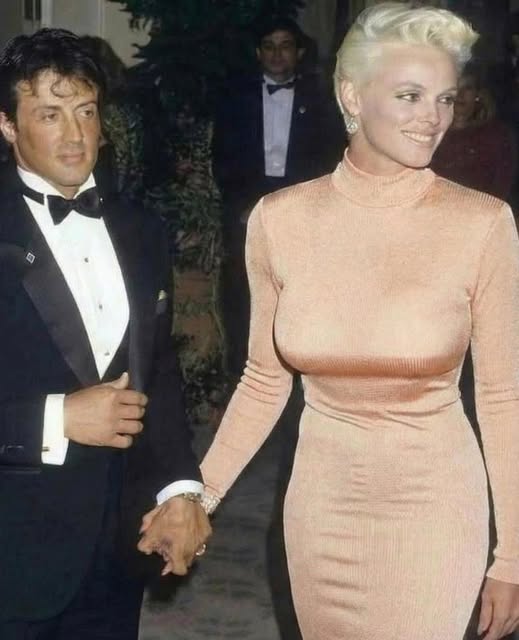

In the world of entertainment, bold headlines often promise dramatic revelations. Yet the real story behind Brigitte Nielsen is far more meaningful than sensational phrases suggest.
Once a defining figure of 1980s cinema, Nielsen has re-emerged not as a symbol of nostalgia, but as an example of reinvention. At 60, her journey reflects a broader cultural shift in how society views age, identity, and personal growth.
Rather than a sudden “transformation,” her story is one of evolution, shaped by decades of experience, challenges, and self-discovery.

The Rise of an Unconventional Star
Breaking the Mold in the 1980s
When Brigitte Nielsen first entered Hollywood, she stood out immediately. With her height, striking features, and commanding presence, she challenged the traditional image of female leads at the time.
Her breakout role in Red Sonja alongside Arnold Schwarzenegger introduced audiences to a different kind of heroine. Strong, confident, and visually distinctive, she represented a shift in how women could be portrayed on screen.
Soon after, she appeared in Rocky IV, starring opposite Sylvester Stallone. Their on-screen collaboration extended into a highly publicized marriage, making them one of the most talked-about couples of the era.
Navigating Fame and Public Scrutiny
The attention surrounding her personal life often overshadowed her professional achievements. During the late 1980s and early 1990s, media culture frequently defined women through their relationships, particularly when connected to high-profile figures.
After her divorce from Stallone, Nielsen faced the challenge of redefining her identity in an industry that can be quick to label and move on.
Instead of fading into the background, she chose a different path.
Reinvention Beyond Hollywood
Expanding Her Career
Nielsen demonstrated adaptability by exploring opportunities outside traditional Hollywood roles. She became a prominent figure in European television, music, and reality programming, building a diverse career that extended beyond film.
This shift highlights an important principle. Longevity in entertainment often depends on flexibility and willingness to evolve.
Owning Her Narrative
Over time, Nielsen became known for her openness about personal struggles and growth. In an industry that often promotes perfection, her honesty resonated with audiences.
Her interview with Oprah Winfrey is frequently cited as a moment where she reflected on her past with candor, offering insight into the challenges of public life and personal reinvention.
This transparency helped reshape her image, transforming her from a distant celebrity into a relatable figure.

Challenging the Idea of Aging
A Cultural Shift
For decades, Hollywood has emphasized youth as a measure of relevance, particularly for women. Opportunities often decreased with age, reinforcing narrow standards of beauty and success.
Today, that narrative is changing.
Figures like Nielsen contribute to a growing movement that embraces aging as a natural and valuable stage of life. Rather than resisting time, they highlight the confidence and perspective that come with it.
The Concept of Pro-Aging
Nielsen’s approach aligns with what many now call “pro-aging.” This perspective focuses on acceptance, self-care, and authenticity rather than attempting to reverse time.
Her public appearances and social media presence reflect this mindset. Instead of striving to appear younger, she presents herself with confidence and ease, emphasizing well-being over perfection.
The Science Behind Aging and Vitality
Understanding the Process
Aging is influenced by multiple factors, including genetics, lifestyle, and environment. While physical changes are inevitable, overall health and vitality can be supported through consistent habits.
Experts highlight key elements such as:
Balanced nutrition
Regular physical activity
Mental well-being
Strong social connections
These factors contribute to quality of life at any age.
Redefining Beauty Standards
Modern discussions around beauty are increasingly inclusive. The focus is shifting from a single ideal to a broader understanding of individuality.
Nielsen’s presence at 60 reflects this evolution. Her confidence and authenticity resonate with audiences who are seeking more realistic and empowering representations.

Late-Life Motherhood and New Beginnings
Expanding the Narrative
One of the most widely discussed chapters of Nielsen’s life is her experience with motherhood later in life. Becoming a parent again in her fifties challenged traditional expectations and sparked global conversations.
While such decisions are personal and vary widely, they highlight how life paths are no longer confined to a specific timeline.
A Broader Perspective
This chapter of her life reinforces a key idea. Growth and new beginnings are not limited by age. Whether in family, career, or personal development, opportunities can arise at any stage.
Returning to the Spotlight
A Full-Circle Moment
Nielsen’s return to the Rocky universe in Creed II marked a significant moment in her career.
Reprising her role decades later demonstrated both professional continuity and personal growth. Sharing the screen again with Sylvester Stallone added another layer of meaning, showing how time can reshape relationships and perspectives.
Professional Maturity
Her return was not about revisiting past fame, but about embracing the journey that brought her there. It reflected a level of confidence and maturity that resonated with audiences and critics alike.
Media Narratives Versus Reality
The Role of Sensationalism
Headlines often use dramatic language to capture attention. Phrases suggesting shock or regret may not fully represent the reality of a person’s life.
In Nielsen’s case, the narrative is less about sudden change and more about steady evolution.
Looking Deeper
A more balanced perspective reveals a story of resilience, adaptability, and self-acceptance. These qualities are often more impactful than the simplified versions presented in headlines.
Understanding this distinction allows readers to engage with stories more thoughtfully.
Cultural Significance and Influence
Representation Across Generations
Public figures like Nielsen influence how society perceives aging and identity. By remaining visible and active, they help broaden representation in media.
This visibility can inspire people of all ages to embrace their own journeys with confidence.
A Symbol of Resilience
Nielsen’s story resonates because it reflects universal themes. Change, growth, and self-discovery are experiences shared by many, regardless of background.
Her ability to navigate these themes in the public eye adds depth to her influence.
:max_bytes(150000):strip_icc():focal(999x0:1001x2)/brigitte-nielsen-sly-stallone-2000-994e07bcaf564de4be249ca6bc235269.jpg)
Conclusion: A Reflection on Time, Identity, and Human Curiosity
Brigitte Nielsen’s journey is not defined by a single moment or headline. It is shaped by decades of change, resilience, and self-discovery.
Her story challenges traditional ideas about age and success, offering a more inclusive and realistic perspective. It reminds us that identity is not fixed, and that growth continues throughout life.
Human curiosity draws us to stories of transformation. We want to understand how people evolve and what that evolution means. Yet the most meaningful transformations are rarely sudden. They unfold gradually, shaped by experience and choice.
In that sense, Nielsen’s life reflects something universal. Time moves forward for everyone. What matters is how we choose to move with it.
Sources
Mardinolay.com. Article on Brigitte Nielsen’s life and recent public attention
Brigitte Nielsen. Career overview and public appearances
Sylvester Stallone. Film collaborations and historical context
Arnold Schwarzenegger. Film collaborations in the 1980s
Oprah Winfrey. Interview and cultural influence
National Institute on Aging. Research on aging and health
World Health Organization. Healthy aging and well-being
