

When Billie Eilish stepped onto the stage at the Grammy Awards and used her acceptance speech to criticize U.S. immigration enforcement, she likely expected applause from supporters and backlash from critics. What she may not have anticipated was a response from the very people her words invoked: the Indigenous community whose ancestral territory includes the land where her Los Angeles home stands.
Eilish’s statement—asserting that “no one is illegal on stolen land”—was quickly circulated across social media and cable news. Supporters praised her for aligning herself with immigrant rights and Indigenous justice. Critics accused her of hypocrisy, pointing to her wealth and property ownership. Yet amid the predictable political polarization, a more nuanced and revealing reaction emerged from the Tongva tribe, also known as the Gabrieleno Tongva.
Their message was neither a denunciation nor an endorsement. Instead, it was a reminder—measured but firm—that Indigenous histories are not abstract metaphors and that visibility should include specificity.
The Tongva Response: Appreciation, With a Condition

The Tongva are the original Indigenous inhabitants of the Los Angeles Basin, sometimes referred to as the “First Angelenos.” Long before the city became synonymous with Hollywood, freeways, and luxury real estate, it was Tongva territory—home to villages, trade networks, and a deep cultural relationship with the land.
After reports confirmed that Eilish’s estimated $3 million home sits on land recognized as Tongva ancestral territory, a spokesperson for the tribe addressed the singer’s comments. The response struck a careful balance.
According to the spokesperson, the tribe appreciated moments when high-profile figures draw attention to the true history of the United States. However, they noted that Eilish had not contacted the tribe directly regarding her property or her remarks. The spokesperson added that, going forward, it would be important for public figures to explicitly reference the Tongva—not just speak in generalized terms about “stolen land.”
This distinction matters. For many Indigenous communities, broad acknowledgments risk flattening diverse histories into a single talking point. Naming a tribe, its territory, and its ongoing presence affirms that these communities are not symbols of the past, but living nations with contemporary concerns.
Symbolic Language Versus Material Reality
Eilish’s phrase echoed language increasingly heard in activist circles, university land acknowledgments, and progressive political discourse. The idea behind it is straightforward: modern states in the Americas were built on lands taken—often violently—from Indigenous peoples, and immigration debates cannot be separated from that history.
Yet critics argue that such statements can become performative if they are not paired with concrete action. This critique gained traction precisely because Eilish is not only a public figure but also a property owner in one of the most expensive housing markets in the world.
From this perspective, the question becomes uncomfortable but unavoidable: what does it mean to denounce “stolen land” while benefiting from land ownership within that same system?
The Tongva response subtly reframed this tension. Rather than demanding that Eilish sell her home or transfer ownership, they emphasized recognition and engagement. Their request was not for dramatic gestures, but for accurate attribution and dialogue.
Political Backlash and the Culture War Frame
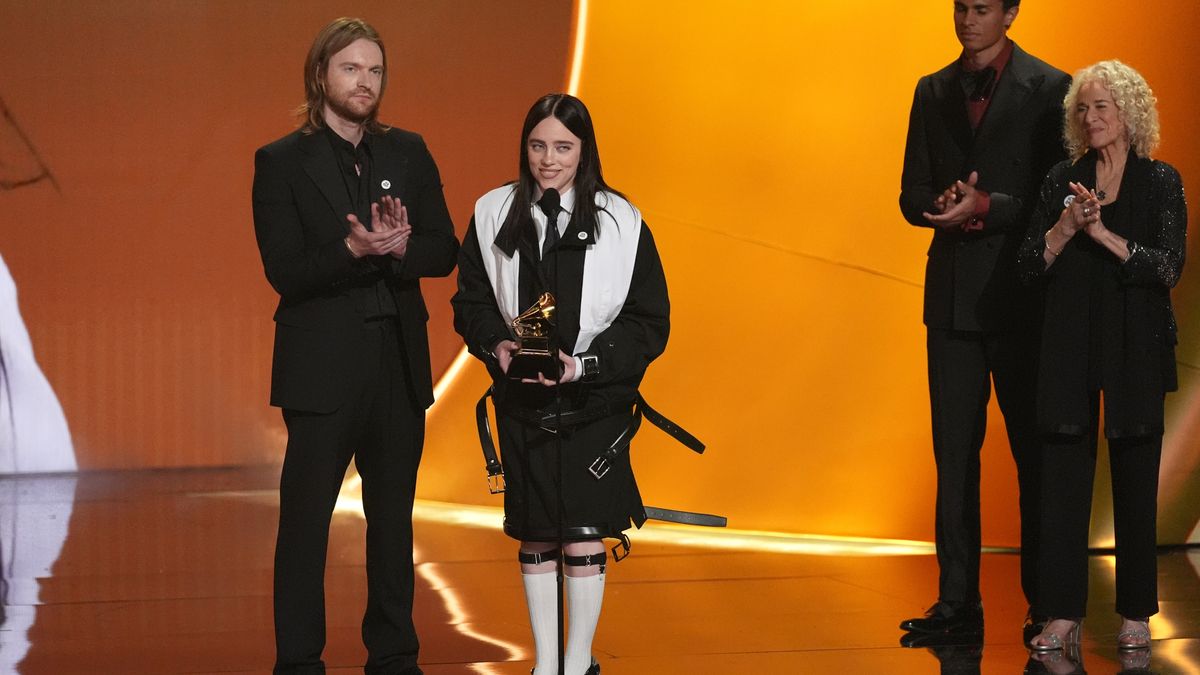
As expected, Eilish’s comments quickly entered the broader culture war. Conservative politicians and commentators seized on the moment to criticize what they saw as celebrity hypocrisy.
Florida Governor Ron DeSantis mocked the idea of “stolen land” rhetoric, suggesting that those who believe it should be willing to relinquish their property. Senator Mike Lee echoed this sentiment, arguing that public acknowledgments without material sacrifice lack sincerity.
Online commentators added their own critiques, pointing to Eilish’s net worth and questioning how much she had materially contributed to Indigenous communities.
These responses followed a familiar script: shift the conversation from historical injustice to individual consistency, and from structural critique to personal accountability. While such arguments resonate with many, they also risk reducing complex histories to a test of moral purity applied to individuals rather than institutions.
ICE, Immigration, and Layered Histories
Eilish’s speech was primarily aimed at U.S. Immigration and Customs Enforcement, reflecting growing frustration among activists over immigration raids, deportations, and enforcement practices. By linking immigration to Indigenous dispossession, she attempted to place modern policy debates within a longer historical arc.
This connection is not new. Scholars and activists have long argued that borders drawn by colonial states disrupted Indigenous territories and imposed legal categories that did not previously exist. From that standpoint, the slogan “no one is illegal on stolen land” is meant to challenge the moral authority of contemporary immigration regimes.
However, the Tongva response illustrates a key complication: Indigenous communities are not monolithic, and their priorities do not always align neatly with national political debates. For many tribes, the immediate concerns include federal recognition, land access, cultural preservation, and economic sustainability—issues that can be overshadowed when their history is invoked symbolically.
Visibility Without Erasure

One of the most significant aspects of the Tongva statement was its emphasis on naming. To say “stolen land” without specifying whose land can unintentionally erase the very people such language is meant to honor.
In Los Angeles alone, multiple Indigenous histories intersect, each with its own displacement story. The Tongva, despite being foundational to the region’s history, remain less visible in public discourse than tribes in other parts of the United States. Explicit acknowledgment helps counter that invisibility.
From this angle, the tribe’s message can be read as an invitation rather than a rebuke. Public figures, they suggest, have an opportunity to amplify Indigenous presence accurately—by consulting tribes, referencing them by name, and supporting initiatives that address present-day needs rather than only historical narratives.
Celebrity Activism: Power and Limitations
Eilish’s case highlights a broader pattern in celebrity activism. When artists speak on political or social issues, they bring enormous visibility—but also simplify complex topics for mass consumption. This can spark conversation, but it can also flatten nuance.
Celebrity statements often operate in symbolic space. They raise awareness, signal values, and mobilize audiences emotionally. What they rarely do is resolve the underlying issues they reference.
In that sense, the criticism directed at Eilish may be misplaced if it expects her words alone to effect material change. At the same time, the Tongva response reminds us that symbolism carries responsibility. When a platform is large, even a few additional words—naming a tribe, acknowledging ongoing sovereignty—can shift the impact of a message.
Beyond Hypocrisy Narratives

The accusation of hypocrisy is powerful because it feels intuitive. If someone criticizes a system while benefiting from it, the critique seems invalid. Yet history suggests that most social change has been driven by people operating within imperfect systems, not outside them.
Owning property in Los Angeles does not preclude someone from questioning how land was acquired historically. The more meaningful question may be whether that questioning leads to deeper engagement or remains at the level of rhetoric.
The Tongva did not demand purity. They asked for precision.
A Teachable Moment in Public Discourse
What makes this episode notable is not the outrage it generated, but the alternative model of response offered by the Tongva tribe. Instead of escalating conflict, they redirected attention toward accuracy, recognition, and relationship-building.
Their stance complicates the binary often seen in online debates: either a celebrity is praised as courageous or condemned as fraudulent. Reality, as usual, is more layered.
Eilish’s statement resonated with many because it touched on genuine historical and moral issues. The tribe’s response added depth by grounding those issues in a specific place and people. The political backlash, meanwhile, revealed how quickly such conversations are pulled into partisan frameworks that obscure Indigenous voices altogether.
What Comes Next?
Whether Eilish chooses to engage directly with the Tongva remains to be seen. If she does, it could set a constructive precedent for how public figures address Indigenous histories—not as abstract backdrops, but as living contexts.
More broadly, the episode invites reflection on how society discusses land, history, and responsibility. Acknowledging dispossession is not the same as resolving it. Yet acknowledgment, when done thoughtfully, can open pathways to education, dialogue, and support.
For Indigenous communities like the Tongva, the goal is not to police celebrity speech, but to ensure that when their history is invoked, it is done with respect and specificity.
Conclusion: Words, Land, and Accountability
The debate sparked by Billie Eilish’s Grammys speech illustrates the tension between symbolic activism and lived history. Her words tapped into real grievances and long-standing injustices. The reaction from the Tongva tribe underscored that such language gains meaning only when it points clearly to the people it describes.
In an era when public discourse is often reduced to viral moments and partisan talking points, this exchange offered something rarer: a reminder that history is local, names matter, and visibility without accuracy can still miss the mark.
Whether one views Eilish’s remarks as brave, misguided, or incomplete, the conversation they triggered reveals a deeper truth. The land beneath modern cities is layered with stories that did not end centuries ago. Recognizing those stories requires more than slogans—it requires listening to the people who still carry them.
